
Ask someone why they love a brand, and they rarely describe the thing they bought. They describe a feeling – of being understood, of a life they pictured, of a moment that stayed with them. It is the quiet truth beneath luxury: we are chosen less for what we sell than for what we come to mean. And meaning is made mostly in two places – in the imagination, long before anyone decides, and in the memory, long after the moment has passed.
This is an essay about those two places, and about why they may matter more than the moment we spend most of our effort perfecting.
The dream before the dream
Look closely at how the most considered purchases are actually made, and a pattern appears that is difficult to unsee.
A custom yacht can take close to seven years to move from first daydream to delivery. Only three or four of those years are the build; before them come perhaps two years of dreaming and exploring, and another of deciding. As much as three years, then, can pass before anything is commissioned at all – years spent not in negotiation, but in imagination. The owner is picturing a life: mornings somewhere the rest of the world cannot reach, a family gathered, a version of themselves they are quietly growing into.
It would be easy to read that as a quirk of the very largest purchases. It isn’t. The same shape appears across categories and price points. A landmark holiday – the kind that can cost as much as a house – is dreamt about for a year before an itinerary is ever requested, then shaped over months with a trusted advisor. A bespoke couture dress, made for an occasion or simply for a new vision of oneself, is imagined long before it is worn; the decision to commission it can take six months of its own.
Different worlds, different price tags, the same architecture: a long, quiet life of anticipation, and then a moment that is really its culmination. Call it the dream before the dream – the private, unhurried imagining that happens long before anyone enquires. The purchase sits in the middle of it – brief, and, strangely, not quite the point.
Researchers who study the wealthiest buyers describe this early phase as one of the most consequential, and least visible, in all of commerce. So much of it happens in private that the honest word they reach for is opaque. It is where preference quietly forms – and, for the most part, where for brands it’s challenging to know when is the right time to be present.
Why the object is never quite the object
What the research does agree on is the character of these decisions. They are led by emotion and identity far more than by function. Owners describe their yachts not as assets but as passion – a way to reach places, and moments, that matter to them. A rare watch is spoken of less as a purchase than as a piece of who someone is. The emotional payoff – memory, freedom, belonging, the pleasure of a life fully expressed – weighs far more heavily than any single feature.
This does not mean the buyer is careless; quite the opposite. At this level people scrutinise craft, provenance and authenticity intensely. But scrutiny is how a decision is justified, not how it is made.
A piece that does not fit the story someone is telling about themselves will be admired and left behind, however excellent. And there is a further subtlety worth noticing: the signalling, increasingly, is quiet. The wealthiest buyers are less interested in display for the crowd than in recognition among a small circle who will understand it – a private language of taste. The meaning a brand offers therefore has to be real enough to be felt, and discreet enough to be shared with only the few. Loud will not do it.
The two ends of a moment
If preference forms in the imagination, it endures in memory – and the two sit on either side of the experience we design so carefully.
We know, from a long line of work on how people remember, that we do not store experiences evenly. We keep the peaks and the endings, and we let the rest fade. A stay, a launch, a delivery – however flawless – begins to dissolve almost as soon as it is over, unless something holds it in place. Left to chance, even an extraordinary moment becomes a pleasant blur. Given a form – a story, a ritual, an object worth keeping – it can go on speaking for years.
This is why so much gifting disappears without trace. By some estimates roughly four in five corporate gifts are discarded – not because they lack quality, but because they carry no connection. An object is kept only when it holds meaning: when it is less a token than a reminder of how something felt. Get that right, and the object does something quietly remarkable. It extends the emotional life of a moment in both directions. Before a decision, it says imagine this. After it, it says remember this.
So a brand’s real work turns out to be wider than the moment it controls. It reaches backward into the imagination, where preference forms, and forward into memory, where loyalty is quietly kept.
Why meaning – and why art
None of this is an argument that weakens the role of branding. Branding does something essential: it makes a brand recognisable; it communicates who you are. But recognition and resonance are not the same thing. Recognition tells people what a brand is. Resonance lets them feel it – and feeling is the currency of everything we have been describing: the imagining, the identity, the memory.
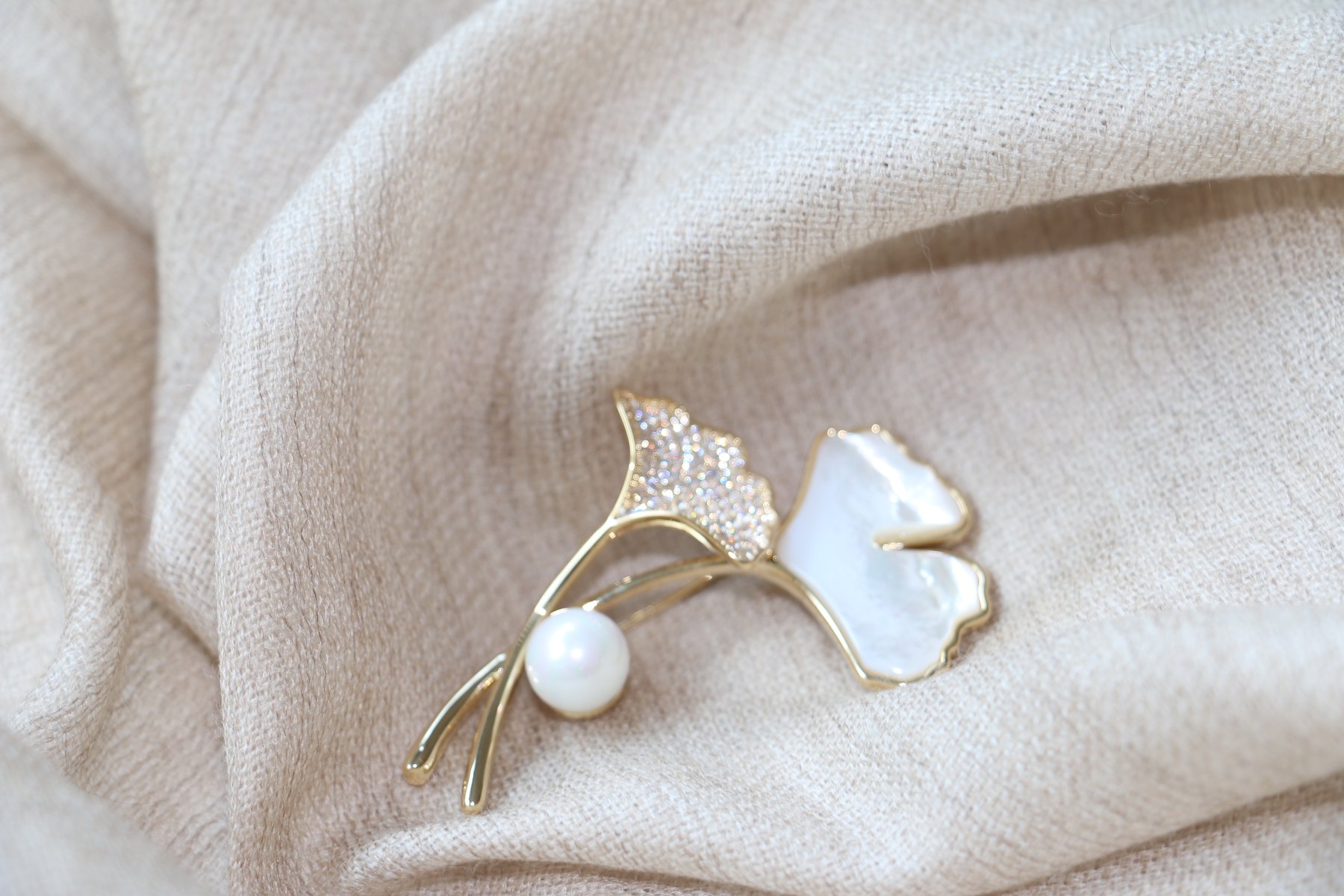
This is where art and design earn their place, and it is worth being precise about why. Studies of how art changes perception have shown, repeatedly, that the mere presence of artistry lifts the sense of value and meaning attached to whatever it touches – an effect independent of the object’s function. Art does something a service cannot: it moves the imagination. It lets someone picture a future before they have chosen it, and hold a feeling after the moment has gone. It is also, not incidentally, the hardest thing to imitate. Anyone can send a gift; it’s much more challenging to create art that expresses meaning.
Which is why, for this audience, beauty is not the differentiator. Beauty is the price of entry – expected, and everywhere. What creates attachment is meaning made visible: through composition, material, symbol, the quiet references a piece makes.
Designing what continues
Luxury has become genuinely extraordinary at the moment itself – the arrival, the opening, the handover, the occasion. Brands pour remarkable care and craft into those, and it shows. What is less charted – because it is the hardest part to see – is the long imaginative life around that moment: the anticipation before, the remembering after. These are quieter territories, and few brands have had a deliberate way to work in them, simply because there has not been an obvious language or method for doing so. A frontier, more than anything.
The method is less mysterious than it sounds. It begins not with an object but with meaning: discovering what a brand already holds for the people who matter to it, interpreting that meaning artistically, expressing it in something people keep, and designing that expression to continue – into a ritual, a memory, the beginning of the next chapter. The object is simply the bridge between what a brand means and what a client can imagine.
It is easiest to see through the doors it opens:
There is a commercial edge here worth naming plainly. Because preference forms in the imagination, the brand that becomes part of that private picture earliest is often the one eventually chosen. A well-made expression is not only a memento of a relationship that already exists; it can be the quiet beginning of one. And the evidence on how these buyers build confidence points the same way: trust and desire grow through authentic narrative and craft – through things that feel true and worth keeping, far more than through persuasion.
A different question
None of this asks a brand to do more than it already does so well. It asks a slightly different question. Not only, how do we make this moment exceptional? – which the best already answer – but, what could allow this moment to continue, in someone’s imagination and in their life?
The answer is rarely louder. It is usually more meaningful.
The most meaningful moments do not end. They continue – in the dream before the dream, and in the memory long after.
The brands that learn to design for those two quiet places will be the ones people choose, remember and return to – without ever quite being able to say why.
