
A luxury brand can post an excellent satisfaction score and still be quietly losing ground. The dashboard is green, the guests are content, the service is faultless – and yet referrals thin, a competitor becomes the name clients mention, and relationships that were meant to last a lifetime begin, imperceptibly, to loosen.
The reason is rarely a shortfall in service. It is that the numbers that matter most in luxury are the hardest to see.
We already know that client experience carries economic weight. McKinsey reports that, across industries, successful customer-experience programmes have typically delivered revenue growth of 5–10% and cost reductions of 15–25% within two to three years. Those are not luxury-specific figures, and they should not be read as a forecast for any single business – but they establish something worth stating plainly: experience is not the soft side of commercial performance.
The more interesting question for luxury is what conventional experience measurement still fails to see. This is an essay about that hidden economics: where value in a luxury relationship is actually created, why so little of it shows up where we look, and how to measure – and fund – the part that lasts.
What we count, and what we miss
We tend to experience a luxury relationship through four overlapping layers. Function: did it work? Emotion: how did it feel? Identity: what does being part of this world say about me? And meaning: what has this relationship come to represent? Most measurement is concentrated in the first two.
Satisfaction scores, service levels, response times, a single headline number for how likely someone is to recommend you – all read the functional and emotional layers. That is worth knowing, and worth doing well. Functional excellence is expected now; emotional excellence increasingly is too. But neither necessarily tells us whether a relationship has become part of a client’s identity, memory or sense of belonging. This is often where preference becomes harder to fade.
There is good evidence for looking beyond individual moments. McKinsey’s cross-industry research found that satisfaction with the end-to-end journey was substantially more predictive of overall satisfaction and willingness to recommend than satisfaction with any single touchpoint – and in hotels the relationship was particularly clear. Clients do not experience a brand as a dashboard of separate encounters. They experience a relationship.
Yet even journey measurement has a boundary. It is very good at asking what happened across an experience. It is far less equipped to capture what happens afterwards – what is remembered, what acquires meaning, what becomes part of identity, and what eventually brings someone back.
There is a second blind spot, and it is one of timing. A relationship tends to be measured while it is happening during the experience, but much of its value forms on either side of that window:
Where value forms — and when it is measured
BEFORE: Imagination → Preference. Preference first forms in the imagination, long before any enquiry.
DURING: Experience → Recognition. The part every dashboard already measures.
AFTER: Memory → Meaning → Connection. Where the relationship continues beyond the experience.
COMMERCIAL EFFECT: Return · Referral · Advocacy · Preference.
Companies are exceptionally good at measuring the middle. Preference, though, first forms earlier – in the imagination, long before anyone enquires, and loyalty is kept later, in the memory, long after the moment is over. Both sit outside the frame, and the commercial effects that follow are treated as consequences rather than something a brand can design toward.
There is a quiet consequence to all this. What cannot be measured tends not to be funded, so investment flows to the parts that are easy to count. The economics are hidden not because they are small, but because our instruments are pointed at the floor.
Where the returns actually sit
If the upper layers are where a luxury brand is chosen, where does that show up commercially? Rarely in the next transaction. It shows up in the behaviours that make a luxury business durable, and that excellent service alone does not necessarily secure::
All four can be strengthened at the identity and meaning layers – particularly once functional excellence has ceased to differentiate, which at this level it soon does. They plainly have other causes too: product, trust, switching costs, availability, relationship management. But when those are broadly equal across competitors, what remains to separate them is what the relationship has come to mean. And each of these returns is delayed, diffuse and shaped by many moments at once, which is what makes it so hard to attribute to any single gesture.
The evidence also thins as we move higher up the relationship, from service and journey performance into identity, symbolism and meaning. That is partly the problem itself: these effects are harder to isolate, slower to appear, and often visible only in later behaviour. There is no clean dataset for what a meaningful relationship adds to the lifetime value of a client at this level, and general-market studies, however suggestive, do not establish the economics of the very top.
The absence of a neat attribution model should not be confused with an absence of value. But neither should we claim causality where it has not been demonstrated. That gap – value we can observe, but cannot neatly attribute – is the measurement problem this essay is really about.
Why it stays hidden
Four things keep this economics out of sight. The returns are delayed, sometimes by years, as the long pre-enquiry phase of a large decision shows. The client base is small, so clean statistics are scarce. The drivers are often psychological, social and symbolic, and those resist a tidy number. And much of the decisive activity happens in private, in a phase researchers themselves describe as opaque.
None of this is a failing on anyone’s part. It is a measurement gap: the most valuable layer of a luxury relationship is the least measured, and what is least measured is least funded. Closing the gap is less about spending more than about learning to see what is already there.
The difference between a cost and an asset
So far this has been an argument about layers and timing. An object makes it concrete – and the most measurable object in the room is a gift.
Many corporate gifts are received politely and quietly set aside. Whatever was spent on them is a cost incurred once. That is usually not a failure of quality; the object may be expensive and beautifully made. It is that nothing about it connected to the person, the moment or the relationship, so it was given no reason to be kept.
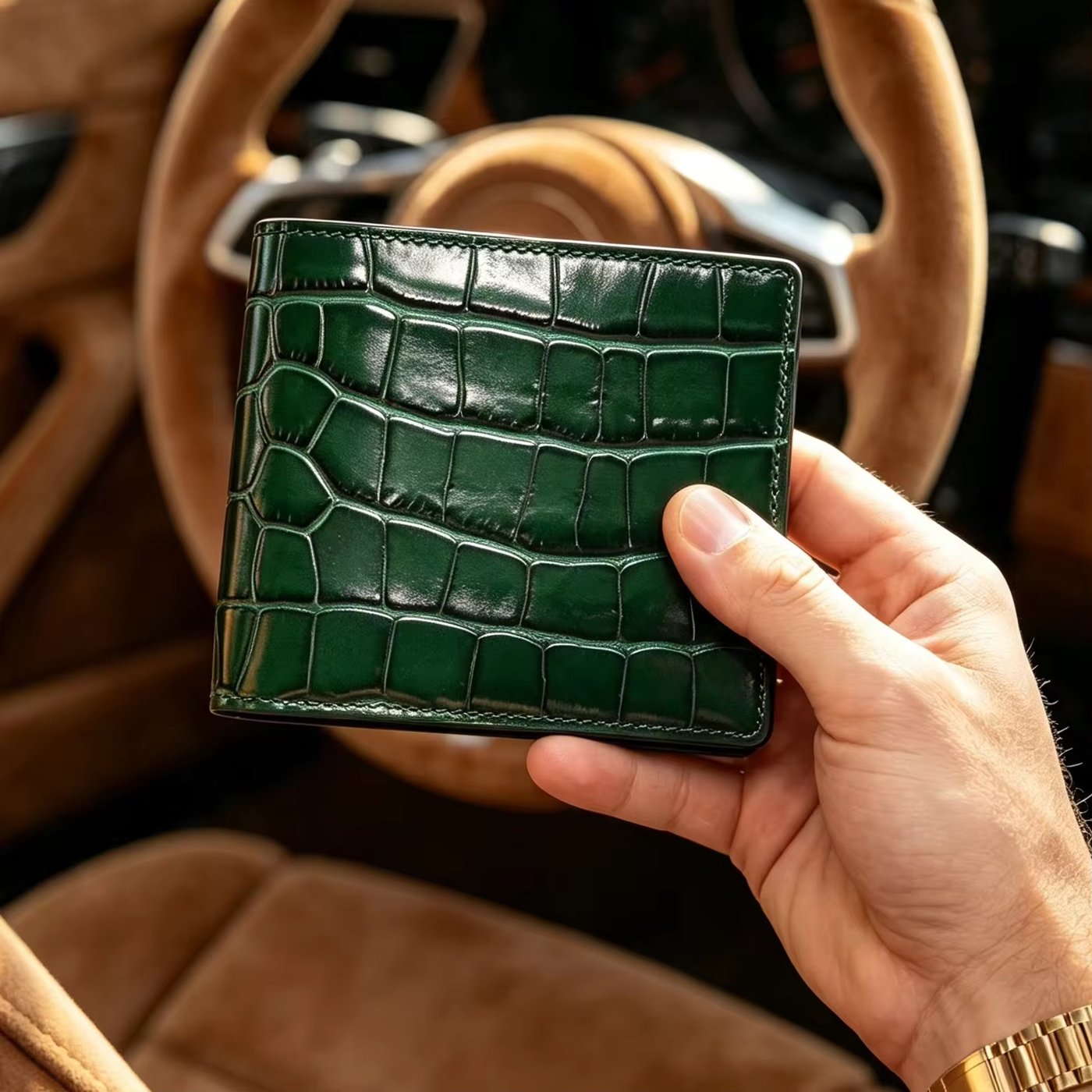
An object can also do the opposite. Kept on a desk, worn, photographed, returned to, it keeps working between interactions, when the brand is not in the room, anchoring a memory and renewing an association each time it is seen. It behaves less like a cost than like an asset: a relationship asset, earning a return long after it was made.
Meaning is not the only reason something is kept – utility, beauty, habit, scarcity and timing all play their part, and an object can carry meaning and still go unwanted. But meaning may be the most valuable reason for a brand, because it is the one that connects the object back to the relationship. Which gives the first principle of the hidden economics: in luxury, the same budget can disappear into a transaction or keep working inside a relationship. Meaning is what gives it the possibility of doing the latter.
Measuring what matters: a portfolio, not a score
If no single number can capture this, the answer is not a better number; it is a portfolio. The most defensible way to read the upper layers is to track several linked outcomes over time rather than one headline figure:
Because the base is small and the effects are delayed, this works best as designed measurement – pilots, matched cohorts, outcomes linked to the CRM, and longer time windows – built in from the start rather than reconstructed after the fact.
The compounding case
Put plainly, the shape is this. A forgettable gesture is a cost incurred once. A meaningful one can behave like a relationship asset: kept, revisited, renewing an association each time it is encountered, and working in the gaps between the moments a brand is present. One shows up cleanly on a report and may end with the transaction. The other is harder to see, but has the possibility of continuing to work for years.
Which is why the meaning layer, for all its quietness, may be the most commercial part of a luxury brand, and why the thing so often filed under the soft end of the business can be the most economically serious thing in it.
Where ArtLuxe comes in
A word on why we are writing this. We begin with the relationship. Before deciding what to create, we look at the people, moments and meanings that matter within it: what deserves recognition, what should be remembered, where belonging can be strengthened, and what the relationship might become next.
Then we give that meaning a form – through an artistic expression, an object, a ritual, an experience, or a connected programme over time.
The ambition is not simply to add another memorable touchpoint. It is to create something that keeps working between touchpoints: carrying recognition, memory and meaning when the brand itself is no longer in the room.
That is where we believe some of the least visible, and potentially most durable – value in luxury relationships is built. We are beginning to build this kind of measurement into the way we design programmes, because creative work should ultimately be accountable not only for what was delivered, but for what happened afterwards.
A different question
The question, then, is not whether your client experience scores well. At this level it almost certainly does. The more useful question is whether you are measuring – and funding – the layer where value is actually made.
Because the numbers that matter most in luxury are the ones that arrive late, quietly, and by referral. They are the hardest to see, and the most worth building.